The High Mountain Tundra Ecosystem
Spanning approximately 67 kilometres between Eidfjord in the west and Haugastøl in the east, the National Scenic Route over Hardangervidda forms part of National Road 7 (Rv7). The plateau itself is an undulating peneplain sitting between 1,100 and 1,400 metres above sea level, covering an area of roughly 8,000 square kilometres. It supports Europe’s largest herd of wild mountain reindeer, as well as arctic foxes and specialized alpine flora.
The driving experience is defined by immense horizontal scale. The road stretches across wide expanses bordered by snowfields, glacial lakes, and the looming dome of the Hardangerjøkulen glacier on the northern horizon. The stark alpine vastness contrasts dramatically with the sudden vertical drop into the lush fruit orchards of the Hardangerfjord basin on the western descent.
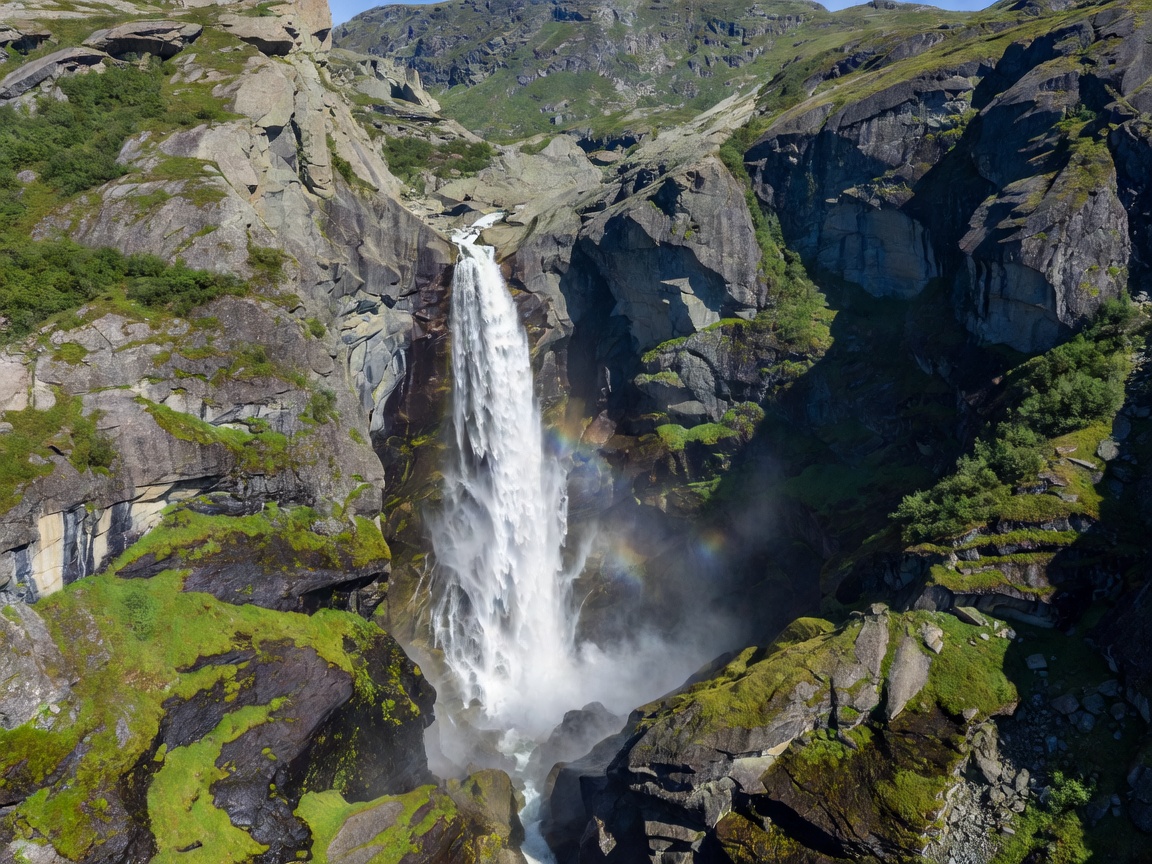
Vøringsfossen and the Måbødalen Step-Bridge
At the western edge of the plateau, where the river Bjoreio cascades off the tundra into the Måbødalen canyon, sits Vøringsfossen. With a free vertical fall of 145 metres and a total step-drop of 182 metres, it is one of Norway’s most visited natural landmarks.
In 2020, an innovative architectural installation designed by Carl-Viggo Hølmebakk was completed over the gorge. A 47-metre step-bridge consisting of 99 individual steps spans the roaring chasm directly above the falls. Built from steel trusses and safety glass balustrades, the bridge provides an aerial perspective into the churning spray and canyon floor, linking the Fossli Hotel grounds with the surrounding canyon rim trail system.
Winter Transit & Convoy Driving (Kolonnekjøring)
Unlike lower passes, Rv7 over Hardangervidda is maintained as a winter route whenever possible, but extreme weather frequently triggers kolonnekjøring (convoy driving behind a massive rotary snowplow) or full road closures.
- Convoy Requirements: Vehicles participating in a convoy must be equipped with approved winter tires with adequate tread depth, full fuel tanks, reflective safety vests, warm clothing, food, and a tow rope.
- The Plow Leader: A designated snowplow leads a convoy of no more than 25 to 30 vehicles at a time, followed by a sweep vehicle. The snowplow driver reserves the legal authority to turn away unprepared drivers or sub-standard vehicles.
- If Stalled in a Whiteout: Drivers must remain inside their vehicles with hazard lights on. Attempting to walk for assistance in a plateau blizzard is a primary cause of hypothermia fatalities.
Technical Comparison: Rv7 vs. Alternative East-West Crossings
| Crossing Route | Summit Elevation | Winter Reliability | Scenic Highlights |
|---|---|---|---|
| Hardangervidda (Rv7) | 1,250 m | Moderate (Frequent convoy / winter closures) | Vøringsfossen, tundra expanses, Hardangerjøkulen |
| Hemsedalsfjellet (Rv52) | 1,137 m | High (Primary heavy truck route in winter) | Broad alpine valleys, rugged passes |
| Filefjell (E16) | 1,007 m | Very High (Most winter-reliable pass in Norway) | Historic Kings Road, subterranean tunnel protections |
Western Descent: The Måbødalen Tunnels
Descending from Fossli to Eidfjord requires navigating a series of spiraling tunnels engineered inside the canyon walls. While modern Rv7 bypasses the old 1916 road via four curved tunnels, glimpses of the historic hand-cut rock tunnels and dry-stone parapets remain visible across the valley floor, highlighting over a century of civil engineering adaptation.